We connect learning to practice, and data to decisions.

Preparing the next scene

    Skip the story
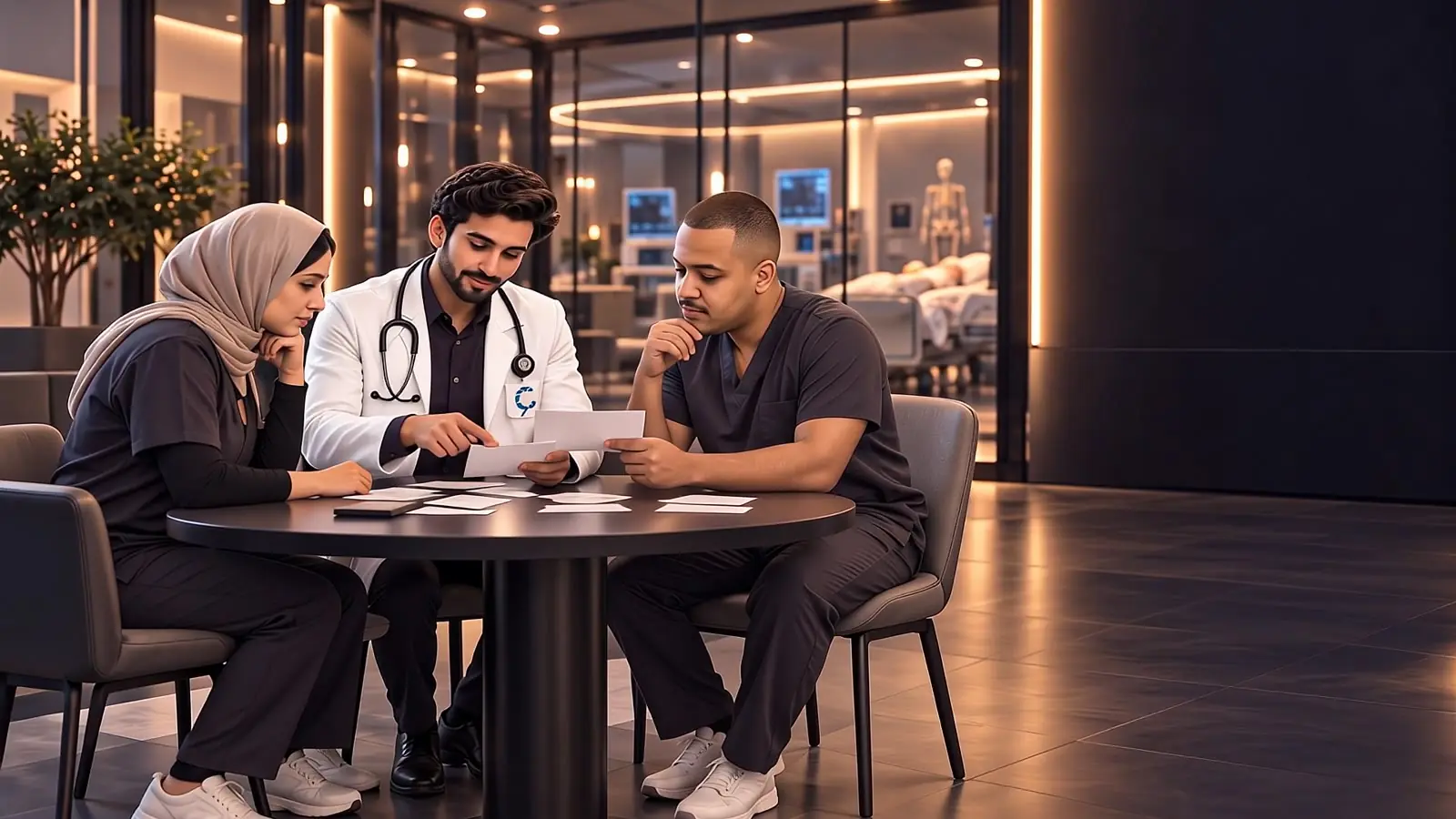
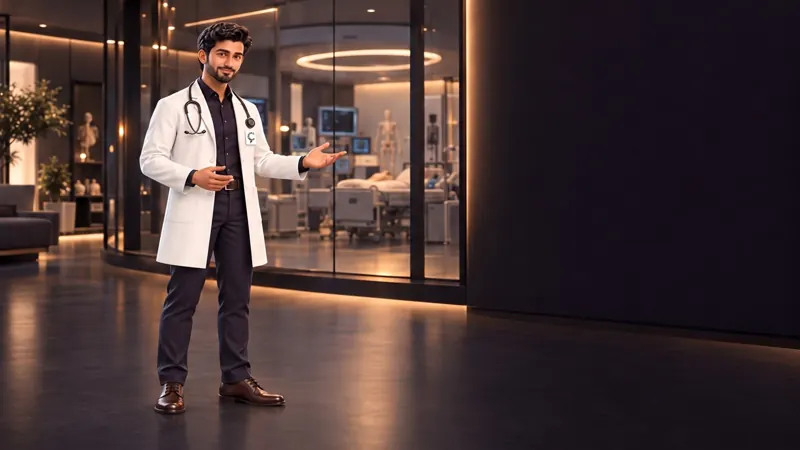
    ALEEM in the lobby of a simulation center, pointing toward glass halls where a healthcare team is training.

    With ALEEM,
    knowledge
    becomes
    practice.

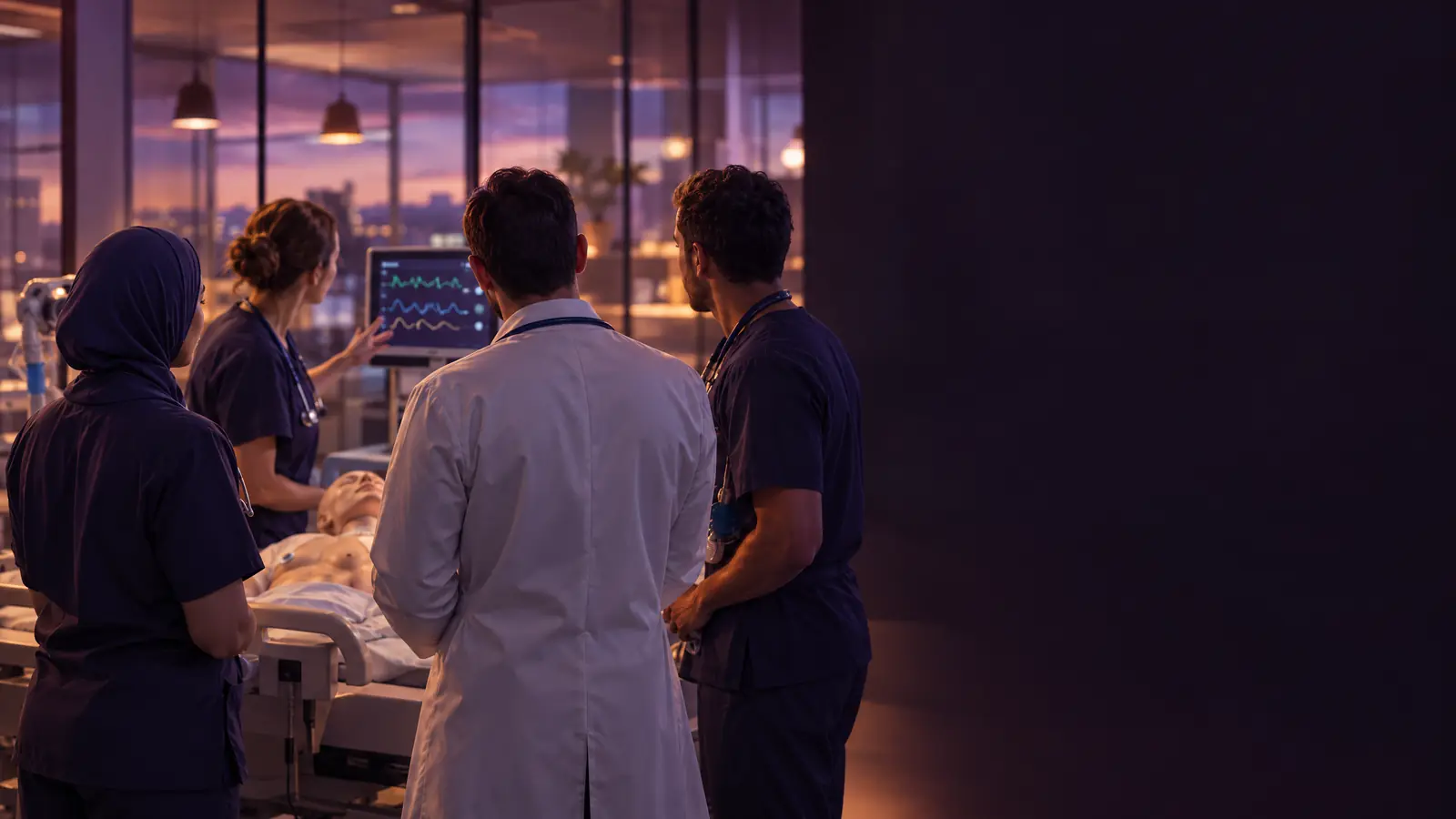
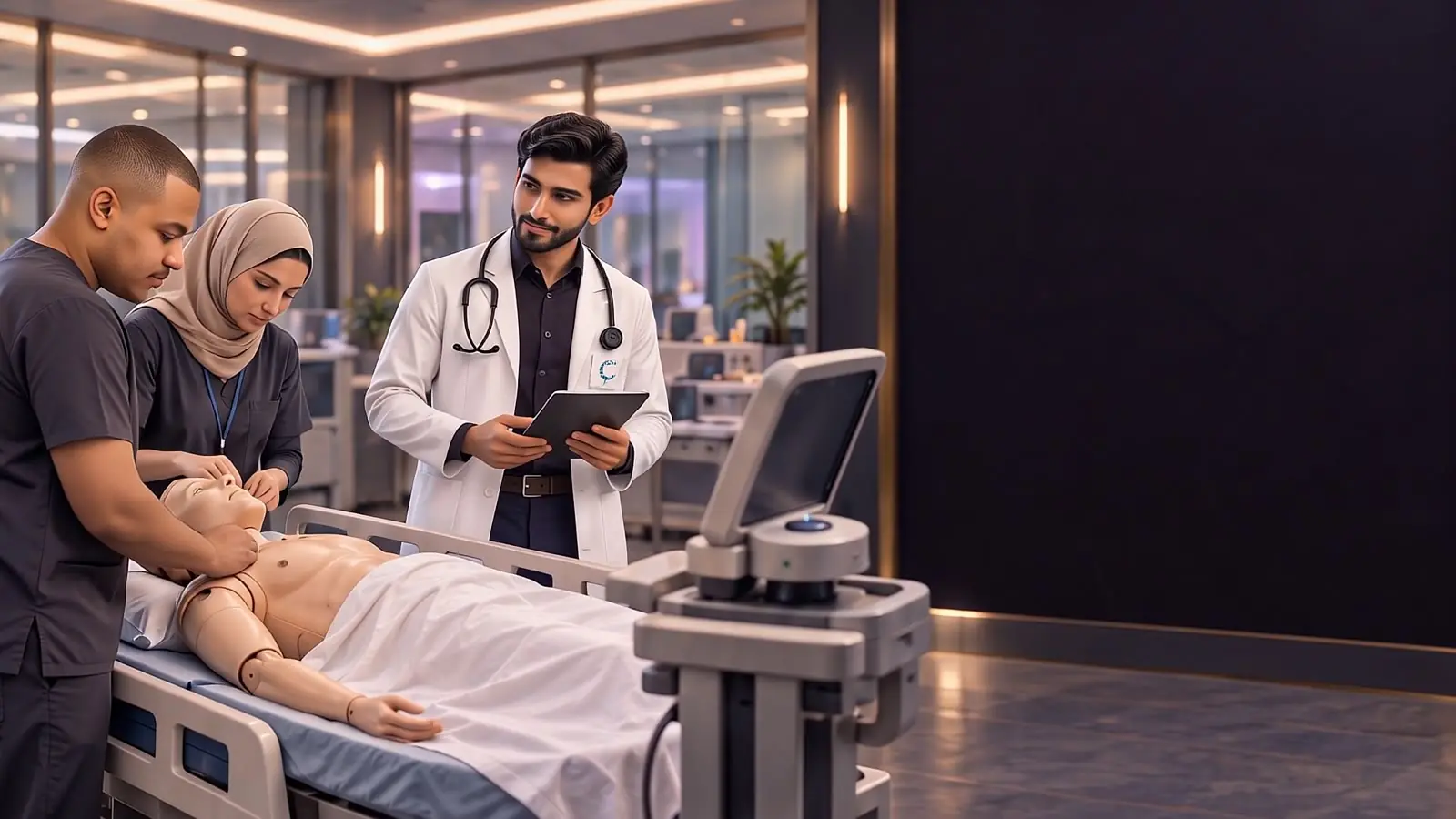
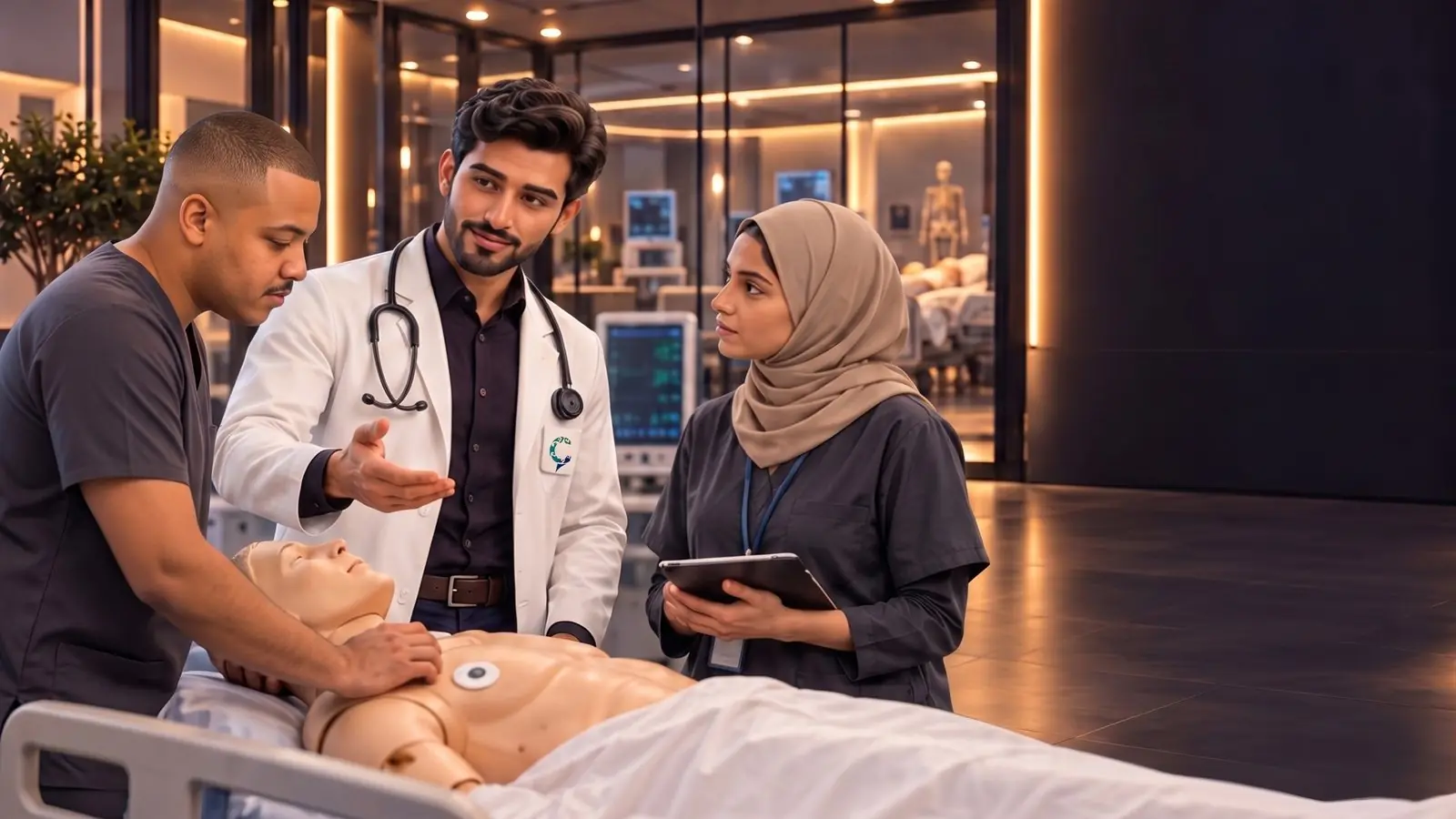
    ALEEM beside a glass simulation room where a team is training on a patient manikin.
    Healthcare simulation

    Simulation builds
    team readiness.

    Realistic scenarios, with simulation educators who assess performance and lead the debrief.

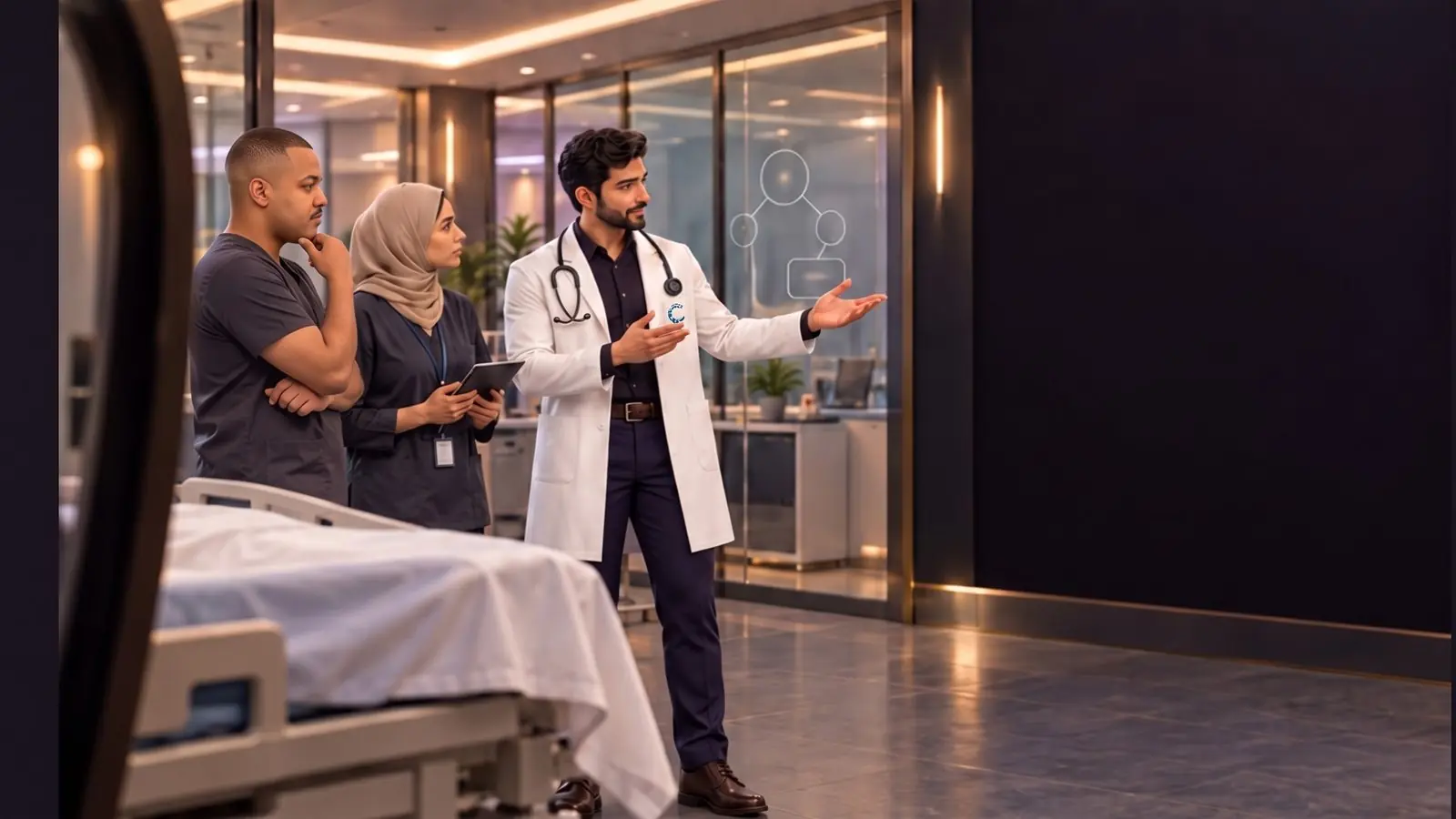
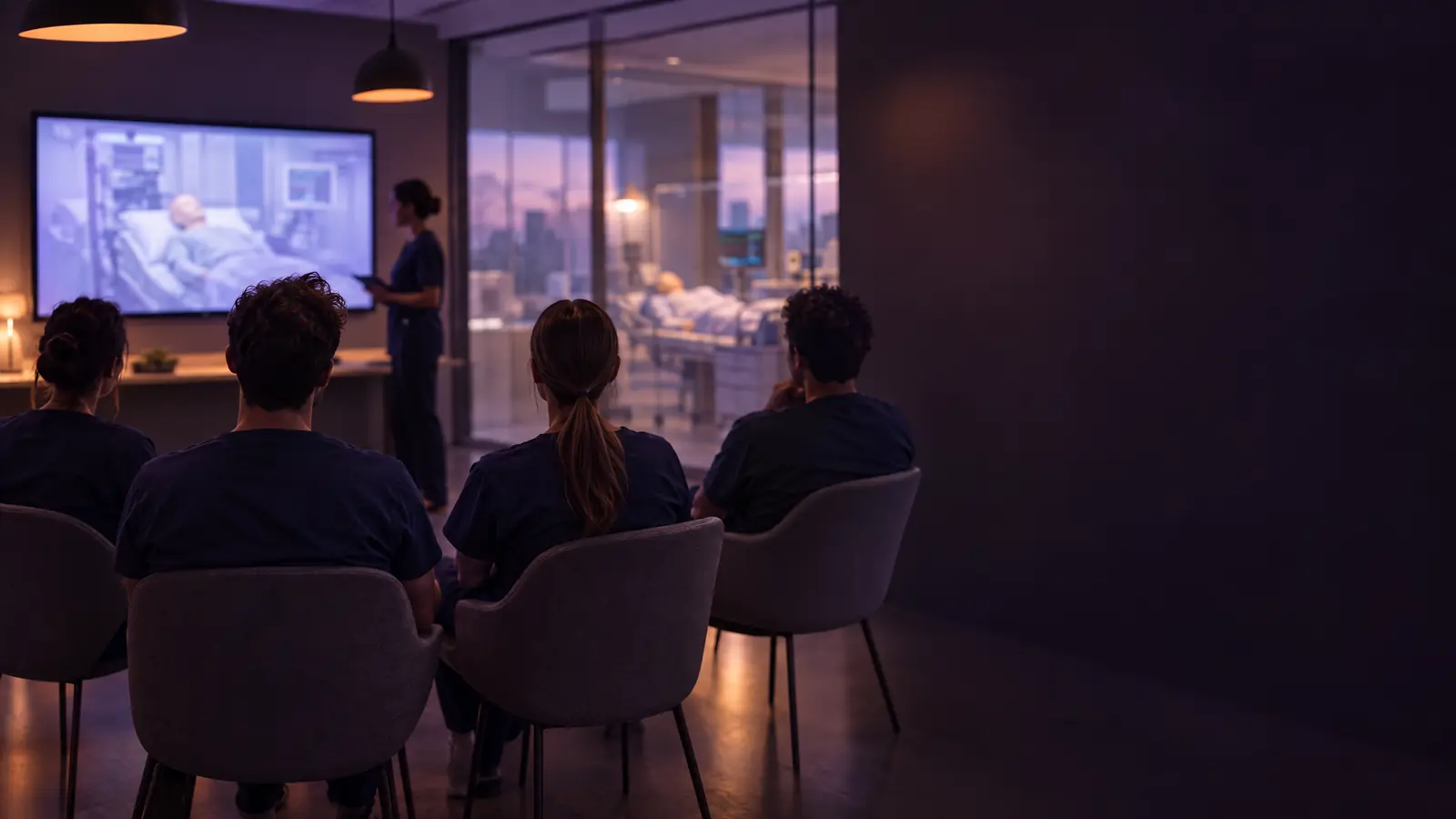
    ALEEM in front of a glass training hall where trainees follow a presentation on the screen.
    Team development

    Learning becomes
    practice.

    Courses and workshops led by certified trainers, with discussion tied to practice.

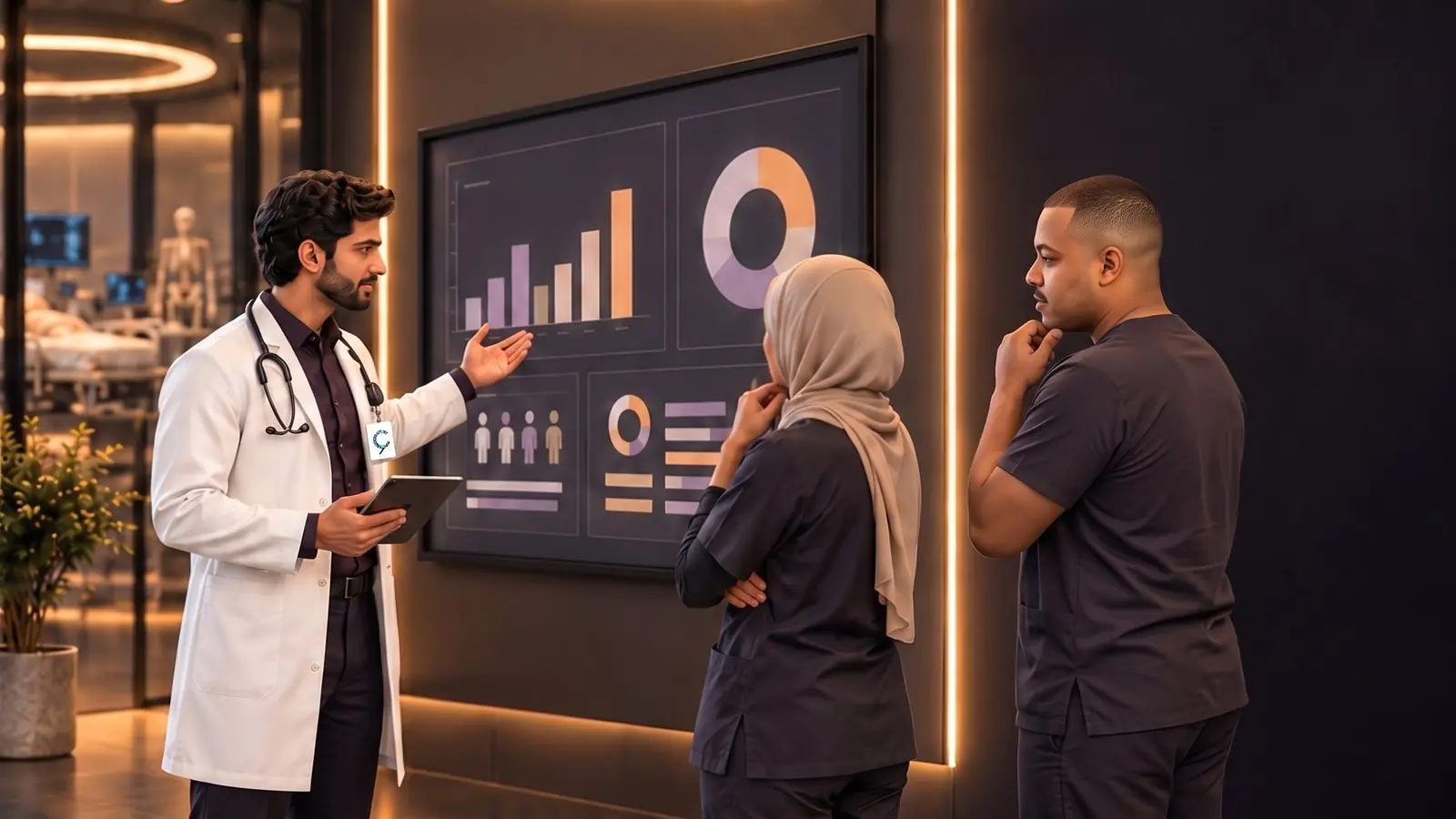
    A glass room where a team reviews a dashboard on a wall screen.
    Health intelligence and data

    Health intelligence
    for a clear picture.

    We review your institution’s metrics and organize its reports and workflows.

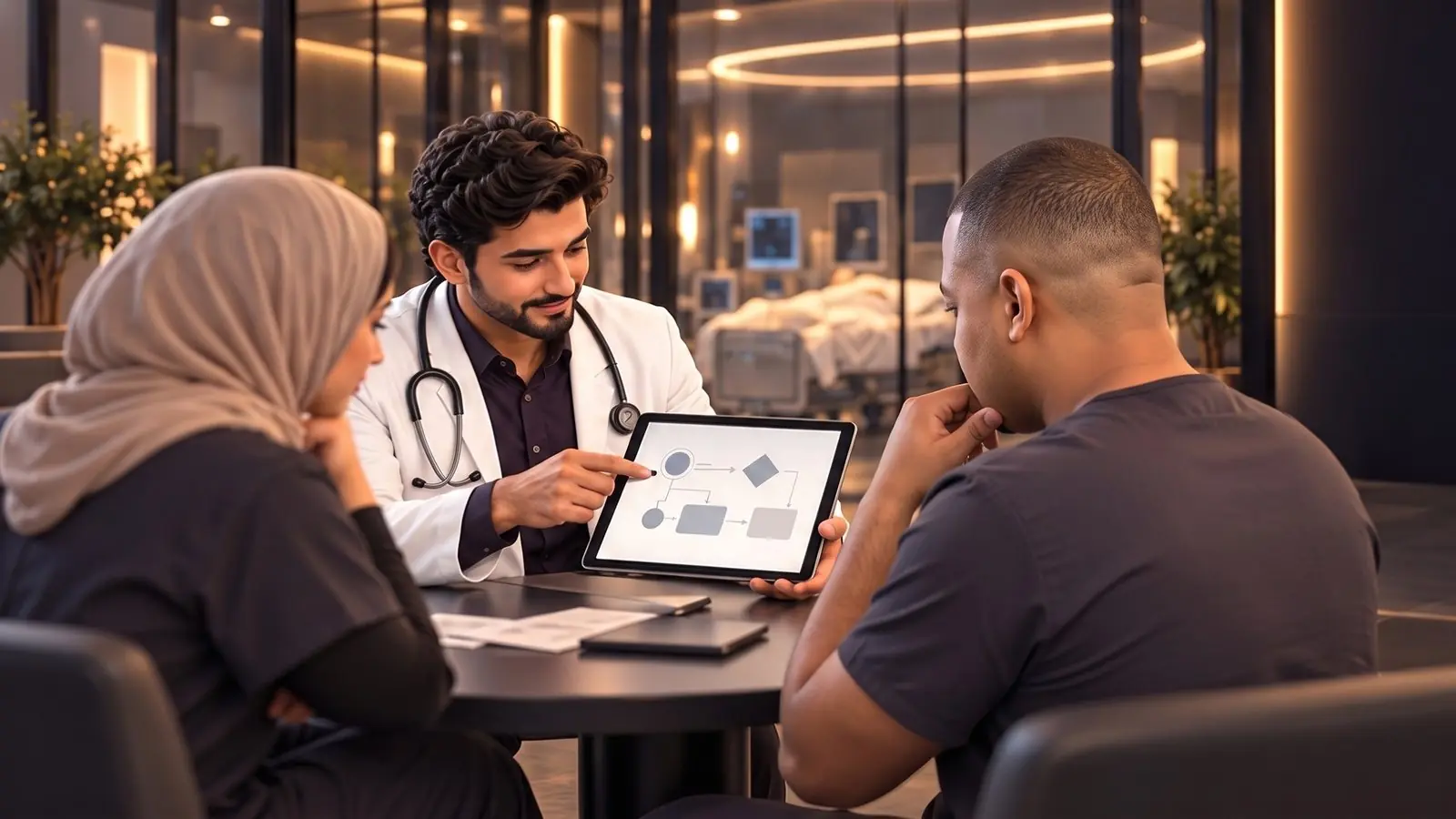
    ALEEM at a glass meeting room where a team is discussing a plan on a board.
    For institutions

    Solutions start
    with your needs.

    We turn your needs into a plan with clear deliverables.

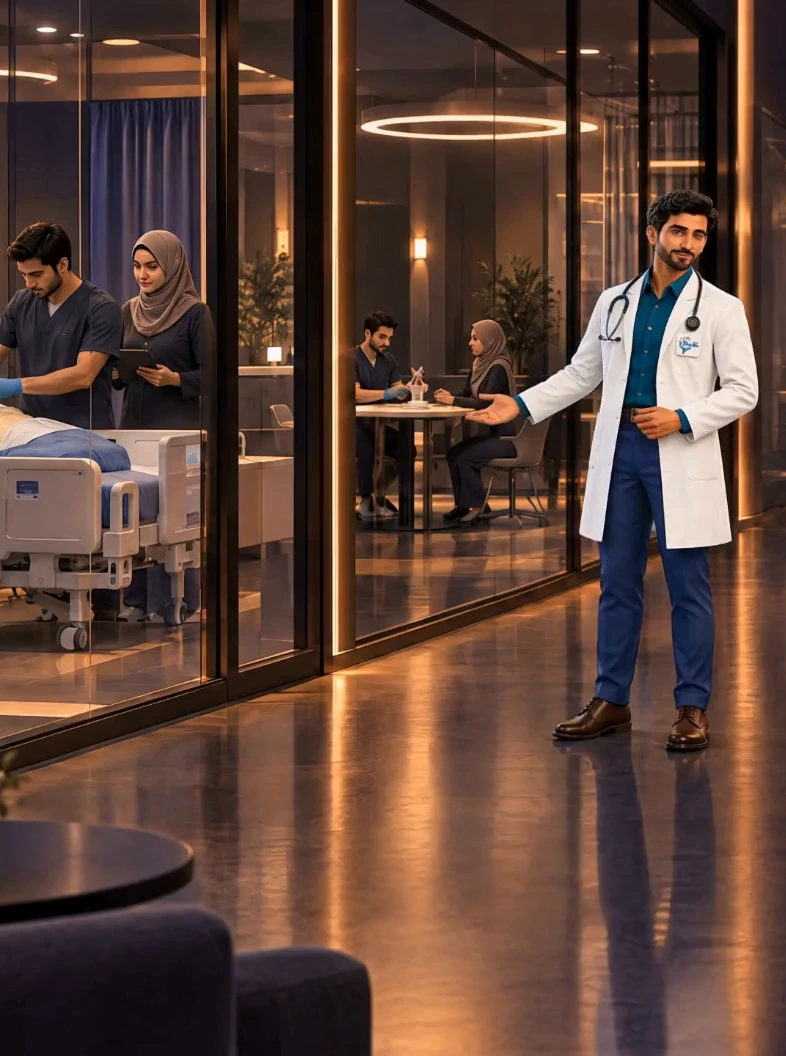
    ALEEM in the lobby, inviting visitors in, with the simulation and training halls behind.

    From here,
    we begin
    with you.

    Three areas, and the expertise that connects them.

    Start with your needs: professional development for your team, a simulation program for your institution, or health intelligence solutions that support operations and decisions.

    For physicians, nurses and healthcare teams

    We design courses, workshops and professional development pathways that connect knowledge with application.

    • Courses, seminars and workshops
    • Learning pathways that support ongoing professional growth
    • Applied practice and professional reflection
    For hospitals, simulation centers and academic institutions

    We support institutions in building simulation programs, developing their teams, and preparing for international accreditation standards.

    • Readiness assessment and gap analysis
    • Scenario development and simulation educator training
    • An implementation roadmap and an evidence system for accreditation
    For management, quality and operations teams

    We design dashboards, report automation and digital solutions that help your institution understand its performance and improve its work.

    • Dashboards and analytics
    • Business and report automation
    • Applications and digital solutions for specific tasks

    Collaboration can start with a specific service, or combine more than one area depending on your needs.

    Selected programs

    Explore our healthcare simulation and accreditation readiness programs. Dates will be announced when registration opens.

    ProgramSimulation track

    Dates will be announced when registration opens

    CHSOS preparation

    Prepare simulation teams to master operational requirements, document readiness, and link training to the accreditation pathway.

    Course and workshop dates are announced here once they are published.

    Register your interest and we will let you know when registration opens.

    A workshop for your team?

    No workshop schedule is published at the moment. Choose the topic and the format, and we will arrange the right option with you.

    We would like a workshop on held for

    Opens your email app with a ready-made message to info@aleem.health. This page does not send any data. How we handle your data: Privacy Policy

    Develop the simulation program at your institution.

    We support institutions in building simulation programs, developing their teams, and preparing for international accreditation standards.

    • Current-state assessment and gap analysisCovering the program, facilities and team, and setting priorities.
    • Developing scenarios and simulation educatorsScenarios drawn from your institution’s own practice, in the modality that fits the goal.
    • Preparing for accreditation requirementsAn implementation roadmap and an evidence system. The accreditation decision remains with the accrediting body.

    Worked example: a post-operative patient whose vital signs are deterioratingIllustrative example

    A learner at a tablet, working through a digital clinical case
    One learner makes the decision inside the case and sees its effect at once.
    1. Situation

      The learner sees the vital-sign readings during an evening round.

    2. Decision

      The learner sets the priority: re-measure, inform the physician, or call the response team.

    3. Feedback

      The learner sees the effect and timing of the decision, and the standard it was measured against.

    How it is assessed: The learner’s recorded decisions are reviewed against stated criteria. The system does not capture physical performance.

    A nursing team working with a simulation manikin while a simulation educator observes and documents on a tablet
    The team practices hands-on; the simulation educator observes and documents performance.
    1. Situation

      The team faces a simulation manikin with changing signs, operated by the simulation educator.

    2. Practice

      The team assesses the patient, communicates and escalates, hands-on.

    3. Feedback

      A debrief led by the simulation educator, on decisions, communication and teamwork.

    How it is assessed: The simulation educator observes hands-on performance directly and documents it against an agreed observation checklist.

    After the digital pre-work, the team applies the same scenario in person on the simulation manikin
    Short digital pre-work, then the same scenario in person.
    1. Preparation

      Short digital pre-work before the session to review the early warning criteria.

    2. Practice

      An in-person session on the same scenario with the team.

    3. Feedback

      A debrief linking the pre-work decisions to what happened in the session.

    How it is assessed: The decisions in the digital pre-work are reviewed; then the simulation educator observes performance in the session.

    Data and health intelligence solutions that support your institution’s work.

    We design dashboards, report and workflow automation, and digital solutions for specific tasks — according to your institution’s needs.

    Average outpatient waiting time — this week

    34min

    3 minutes less than last week

    Target: 30 minutes or less

    Trend over 12 weeks (minutes)

    Clinics compared this week (minutes)

    The average has improved for eight weeks, but orthopedics, internal medicine and OB/GYN are still above target. We start by reviewing orthopedic appointment scheduling.

    Show the values as a table
    Average waiting time in minutes by clinic this week (illustrative data)
    ClinicAverage waitAgainst target (30)
    Orthopedics41 minAbove target
    Internal medicine38 minAbove target
    OB/GYN32 minAbove target
    Pediatrics29 minWithin target
    Dermatology26 minWithin target
    Average weekly waiting time over 12 weeks (illustrative data)
    WeekAverage wait
    146
    245
    346
    444
    543
    642
    742
    840
    939
    1038
    1137
    1234
    1. Receive periodic data

      Department files arrive on time, in one place.

      Received · 6 files
    2. Review

      Completeness and definitions checked, issues highlighted.

      Reviewed · 2 notes
    3. Approval

      The owner approves; who approved and when is recorded.

      Approved
    4. Prepare the report

      A report in a standard format, ready to send.

      Report ready

    Before

    Manual compiling from scattered files, follow-up by email, and several copies of the same report.

    After

    One flow: each step has an owner and a visible status, and the report is prepared in the same format every time.

    Example: the weekly performance report — all steps complete.
    Task

    Search the institution’s documents and answer with the source cited.

    Input
    What are the steps to approve CPD hours for nursing?
    Output
    1. The employee submits the approval request with proof of attendance, within the period set in the policy.Source 1
    2. The continuing education department reviews the request and checks the hours against its criteria.Source 1
    3. The approved hours are added to the employee’s record, and the employee is told the result.Source 2

    Source 1: Professional development policy manual · Source 2: Staff records procedure (illustrative names)

    Other examples we design as needed: organizing and routing operational requests, and preparing summaries linked to their sources.

    The figures and interfaces are illustrative, to explain the kind of solutions we design for each institution’s needs; they are not a ready-made product or an existing integration. These solutions are for operational, administrative and reporting work, not for diagnosis, treatment recommendations or clinical decision support.

    Discuss a solution for your institution (opens in a new tab)

    Solutions built around your institution’s needs.

    Collaboration may start with one service — a training program, a simulation program or a data solution — or bring several areas together in one plan.

    1 — Work plan

    The work planFor discussion with the institution
    Goal
    Faster escalation of deteriorating patients on the wards
    Priorities
    Early recognition · communication · documentation
    Scope
    Two wards · nursing and on-call physicians
    Understand
    Design
    Implement
    Review

    Illustrative example

    2 — A solution tailored to your needs

    The tailored solutionBuilt from one or more services
    LearningA short online coursePhase 1
    SimulationAn in-person session on the same scenarioPhase 2
    Health intelligenceA dashboard tracking escalation timeOngoing

    Illustrative example

    3 — Review and follow-up

    The review reportDepending on the scope of collaboration
    DeliveredTwo training cohorts and a simulation session
    AchievedEscalation time against the goal
    Next stepExtending the program to a third ward

    Illustrative example — the report’s format, not its results

    1. UnderstandYour needs and current situation; we agree on the goal.
    2. DesignScope, priorities, deliverables and the implementation roadmap.
    3. ImplementWith your team, through the right service or services.
    4. ReviewWhat was achieved against the goal, and the next step.
    See an illustrative example

    A hospital that wants faster escalation of deteriorating patients on its wards.

    1. Understand: a review of delayed cases and a walk-through of two wards, then agreement on a measurable goal.
    2. Design: a short online course, then an in-person simulation session on the same scenario, and a tracking dashboard.
    3. Implement: delivery with the nursing team in two cohorts, with attendance and completion tracked.
    4. Review: a report comparing escalation time with the goal, and a recommendation for the next step.

    This is a general operating pattern, not a case study of a particular hospital.

    Discuss your institution’s needs (opens the booking page in a new tab)

    A team bringing together more than 15 years of professional experience.

    In healthcare simulation, continuing professional development in healthcare, clinical education and health intelligence.

    • Tahani KhalilChief Operating Officer – Simulation & Training
    • Alaa SaadChief Learning Officer (CPD)
    • Anan Al BadawiChief Academic Officer – Clinical Education & Research
    • Nader Abu KrayemCo-Founder & Chief Executive Officer (CEO)
    Skip animation

    Experience built across our team’s careers.The combined experience of our team members across their careers.

    • 400+Courses
    • 14,000+Training hours
    • 100+Educational workshops
    • 20+Simulation workshops

    From founding to international accreditation.

    Members of our team helped establish two simulation centers from the ground up, train their teams, and develop their policies, procedures and organizational frameworks, through to the centers earning international accreditation in simulation.

    Accreditation is awarded by the relevant accrediting body; ALEEM does not award it or guarantee the outcome.

    Simulationreveals what the team actually needs.

    Learningbuilds the skills it lacks.

    Health intelligenceclarifies an institution’s performance and supports its decisions.

    What would you like to develop?

    Tell us about your needs in simulation, professional development, or health intelligence. We start with a conversation to understand your goal and identify the right next step.

    For healthcare professionals

    Browse the upcoming courses, or register your interest and we will let you know when registration opens.

    For institutions

    A first session to understand your needs and decide where to start.

    Email: info@aleem.health

    How we handle your data: Privacy Policy